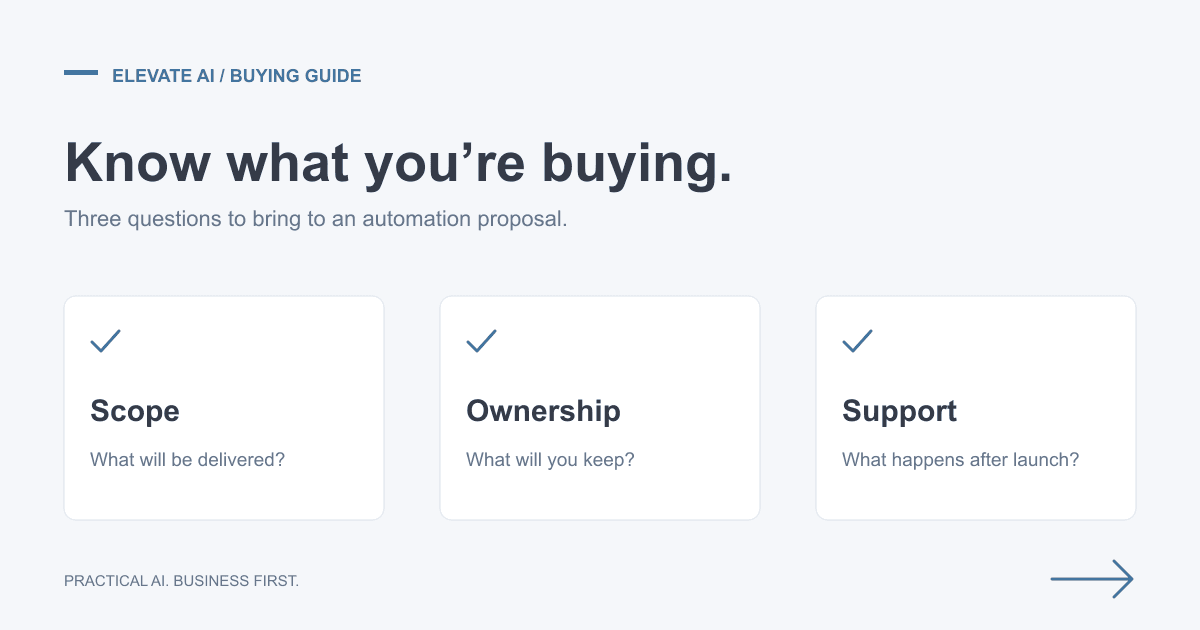
If you are comparing AI automation quotes in the UK, the headline price is only one part of the decision. Two proposals can both say "CRM automation" or "AI workflow build" and mean completely different things. One might include discovery, testing, documentation, human approval controls, monitoring, and support. The other might be a thin setup with little protection after launch.
Elevate AI prices consulting around the agreed scope and deliverables, with implementation quoted separately. The managed Outbound Sales Engine has an initial configuration fee and an ongoing monthly service fee. It has a binding initial three-month minimum commitment; service details are set out in the proposal. See how our pricing works; each proposal should distinguish one-off delivery from ongoing costs.
Related reading: AI automation pricing guide.
1. Is the workflow clearly defined?
A useful quote should name the workflow being automated in plain English. It should explain where the process starts, what systems are involved, what should happen automatically, where a person needs to review the output, and what counts as success.
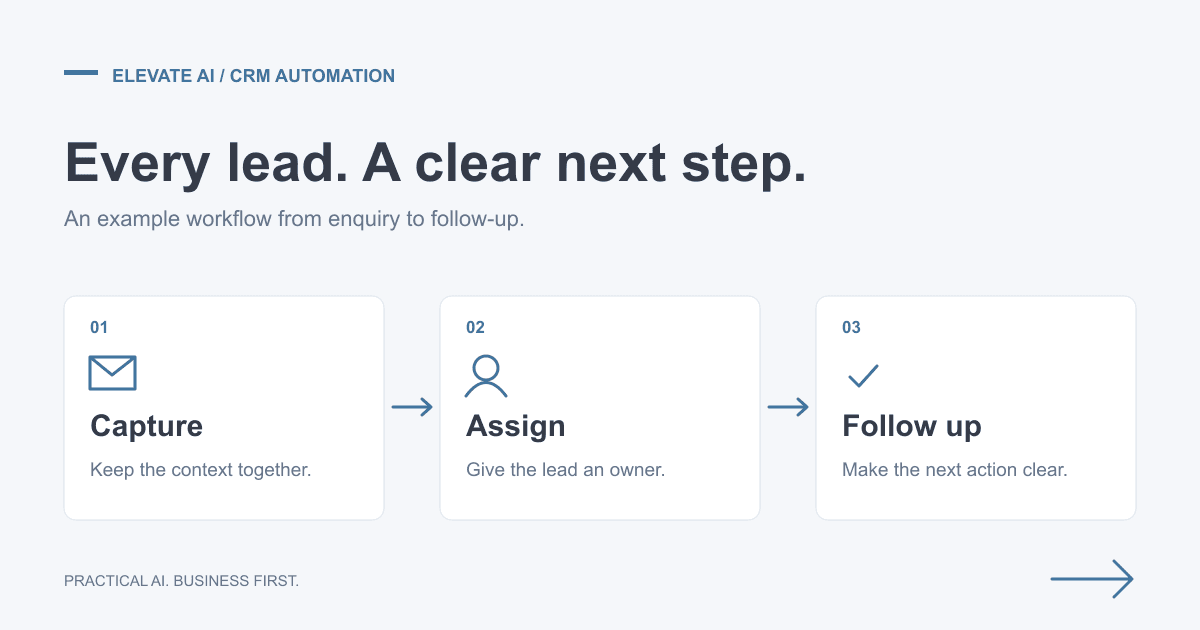
Be careful with vague language such as "AI transformation", "agent setup", or "workflow optimisation" if the quote does not explain the actual process. A good first automation is specific: new website enquiries are qualified, added to the CRM, assigned to the right owner, followed up, and reported weekly. That is much clearer than "improve sales operations with AI".
2. Does the price match the scope?
Compare suppliers against the same brief, not an unsourced market-price range. Separate paid diagnosis, any technical pilot, the production build and ongoing operation. Check whether each figure is a firm quote or an estimate, its VAT basis, assumptions and exclusions.
The quote should make clear whether you are buying a pilot, a full implementation, or ongoing support. If a low quote appears to include everything, check whether testing, documentation, training, platform costs, API usage, and support are actually included.
3. Who owns the workflow after launch?
Ownership matters. Ask who owns the automation, accounts, credentials, documentation, workflow files, prompts, and connected data once the project is complete. You should not be trapped in a system you cannot inspect, maintain, or move away from.
A sensible agency will explain what belongs to you, what belongs to the platform, and what support is needed after launch. If the workflow is built in n8n, Make, Zapier, HubSpot, or another platform, you should understand who controls the account and what happens if you stop working with the agency.
4. How are data, permissions, and approvals handled?
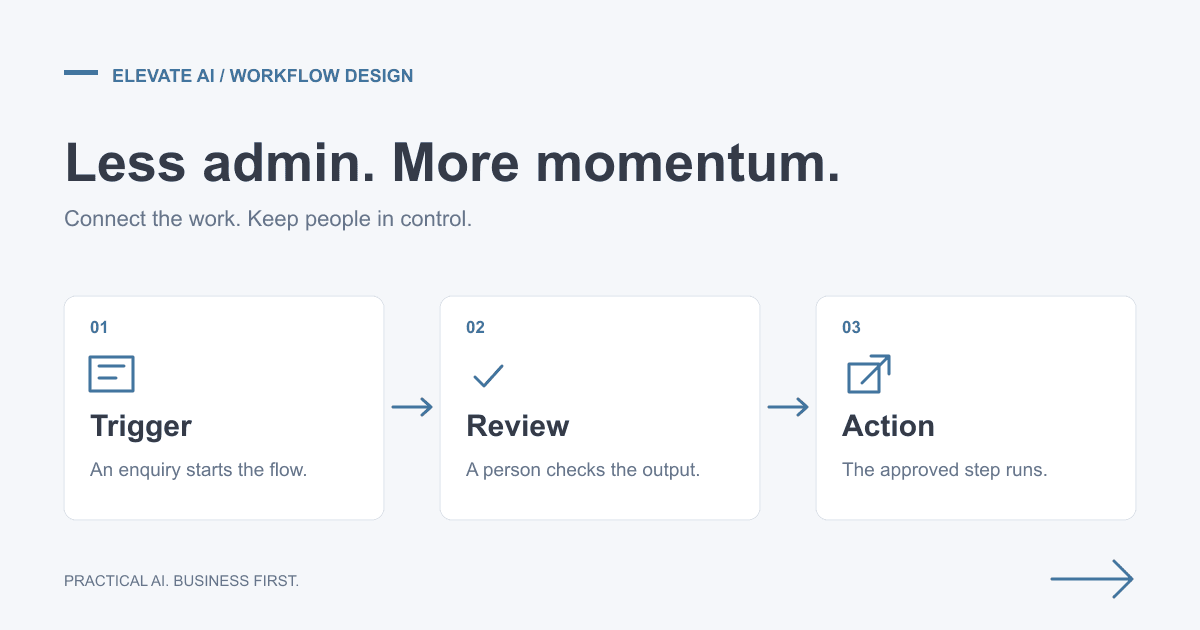
AI automation often touches sensitive business data: customer enquiries, CRM records, emails, documents, invoices, call notes, or sales activity. The quote should explain how access is controlled, what data is processed, where logs are kept, and which actions need human approval.
For customer-facing, financial, legal, healthcare, or regulated workflows, human approval should be designed into the process. The goal is not to let AI act unchecked. The goal is to remove admin while keeping the right person in control of important decisions.
5. What happens when something goes wrong?
Every automation needs failure handling. Bad data, API limits, missing fields, duplicate records, downtime, and unexpected customer messages all happen. A good quote should explain the fallback process: alerts, retries, manual review queues, error logs, and who is responsible for fixing issues.
If the proposal assumes everything will work perfectly, it is not mature enough. Reliable automation is built around exceptions, not just the happy path.
6. What support is included after go-live?
Automation is rarely finished forever on launch day. Teams change, forms change, CRM fields change, suppliers change, and customers behave in ways the first version did not expect. The quote should say what support is included, what response times apply, and what costs extra.
Separate post-launch defect correction included in the build from ongoing maintenance and new development. Ask the provider to name the workflows covered, define a small change, distinguish response time from resolution time, and set out the billing start and notice terms. Do not assume a support agreement can be paused or cancelled immediately.
An inclusive fee should state its software and AI usage allowance and what happens before extra charges are incurred. Separate billing should identify the account owner and the party responsible for payment. Neither model should leave ownership or operational responsibility unclear.
Put the support promise to a practical test
Illustrative scenario: an order arrives in a new document format and the workflow cannot match it to a job record. Ask each supplier how the exception is detected, where the order waits, who is alerted, how the team continues manually and whether changing the parser is included. Compare those answers rather than the word “support” alone.
7. How will ROI be measured?
Before approving a quote, agree the baseline. How many hours does the current process take? How many leads are delayed? How many records are incomplete? How many reports are manually assembled? Without a baseline, ROI becomes guesswork.
The best automation projects measure practical outcomes: hours saved, faster response time, fewer missed follow-ups, cleaner CRM records, shorter onboarding time, fewer manual errors, or more consistent reporting. The quote should connect the build to one or two of these outcomes.
8. Red flags in AI automation quotes
- No named workflow or measurable success criteria.
- No mention of human approval, failure handling, or exceptions.
- No clarity on platform costs, API usage, hosting, or extra seats.
- No handover documentation or ownership terms.
- Commitment to later implementation phases before their scope, dependencies and acceptance criteria are clear.
- Generic AI promises without practical examples or workflow detail.
- Long support contracts with unclear service levels.
Simple comparison table
| Question | Strong answer | Weak answer |
|---|---|---|
| What is being automated? | A named workflow with systems, triggers, outputs, and approvals. | Broad language about AI transformation. |
| What does it cost? | Separate consulting, implementation, running costs and support, with exclusions. | A headline number with unclear running costs. |
| Who owns it? | Ownership, accounts, documentation, and handover are explained. | You depend on the agency with no clear exit route. |
| How is risk controlled? | Human approvals, logs, alerts, testing, and fallback processes. | No mention of exceptions or failure handling. |
Ask for proof of the relevant deliverable
Our electrical-contractor case study shows a completed diagnostic and phased roadmap, including dependencies and approval points. It does not claim measured savings from a completed build. When comparing suppliers, ask for evidence at the same stage as the work you are buying.
Use a simple decision record: requirement, supplier answer, supporting evidence, exclusion and unresolved question. Mark an unanswered item as unresolved rather than treating confident wording as proof.
Next step
If you are still building a shortlist, read our guide to the best AI automation agencies in the UK. If you already know the workflow you want to improve, review our pricing approach or book a free scoping call and bring one process you suspect is leaking time, leads, or consistency.