CRM automation is not about replacing sales judgement. It is about making sure every lead, customer update, task, and follow-up ends up in the right place without relying on memory or manual copying.
For UK SMEs, the most valuable CRM workflows usually connect the systems the team already uses: website forms, shared inboxes, Gmail or Outlook, HubSpot, Pipedrive, Salesforce, LinkedIn, calendars, meeting notes, spreadsheets, and reporting dashboards. The commercial goal is simple: faster responses, cleaner data, clearer ownership, and fewer opportunities slipping through gaps.
If you want help scoping this safely, compare Elevate AI's AI automation services for UK SMEs, workflow automation consulting process, and how Elevate AI pricing works.
What CRM automation should actually do
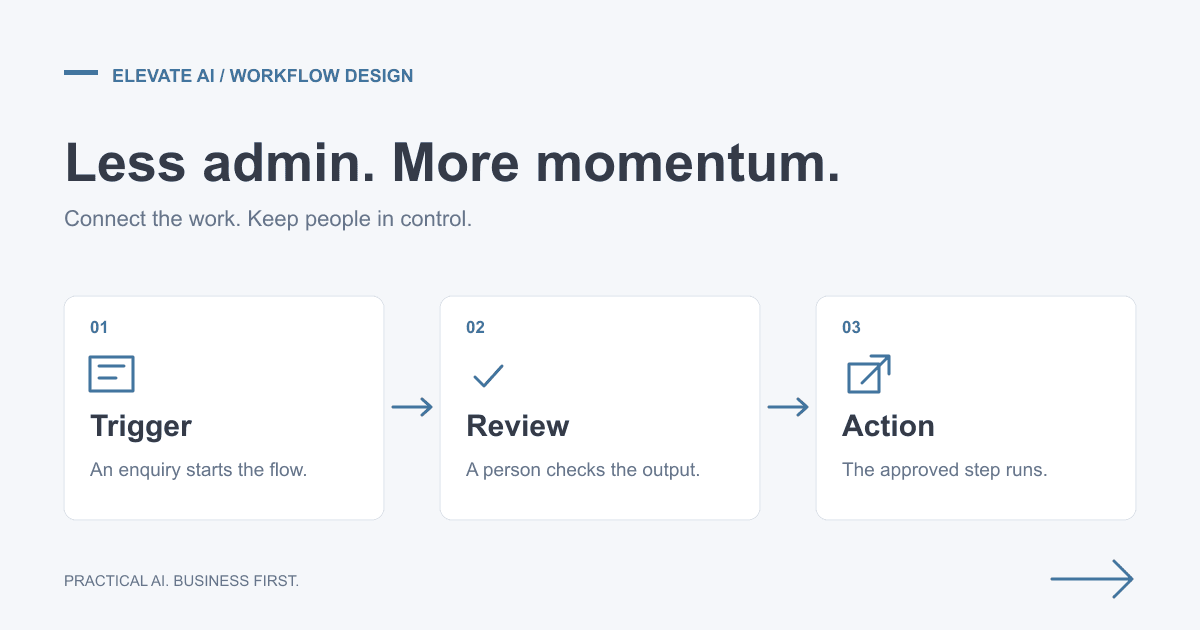
A good CRM automation should take a clear trigger and turn it into a reliable next action. For example, a form submission should create or update the contact, attach the source, assign an owner, create a deal if appropriate, draft a first reply, and schedule the next task.
The workflow should make the CRM more trustworthy. If it creates duplicate contacts, hides context in notes, sends messages without approval, or makes sales stages harder to understand, it is not ready.
Where leads and deals usually leak
- Slow response: enquiries sit in an inbox while the buyer is comparing other suppliers.
- No clear owner: everyone assumes someone else will reply.
- Missing source: the team cannot tell which channel produced the opportunity.
- Poor CRM hygiene: contacts, companies, deals, notes, and tasks are incomplete or duplicated.
- No next action: a good conversation happens, but there is no reminder to follow up.
- Weak reporting: management cannot see which leads are moving, stuck, or lost.
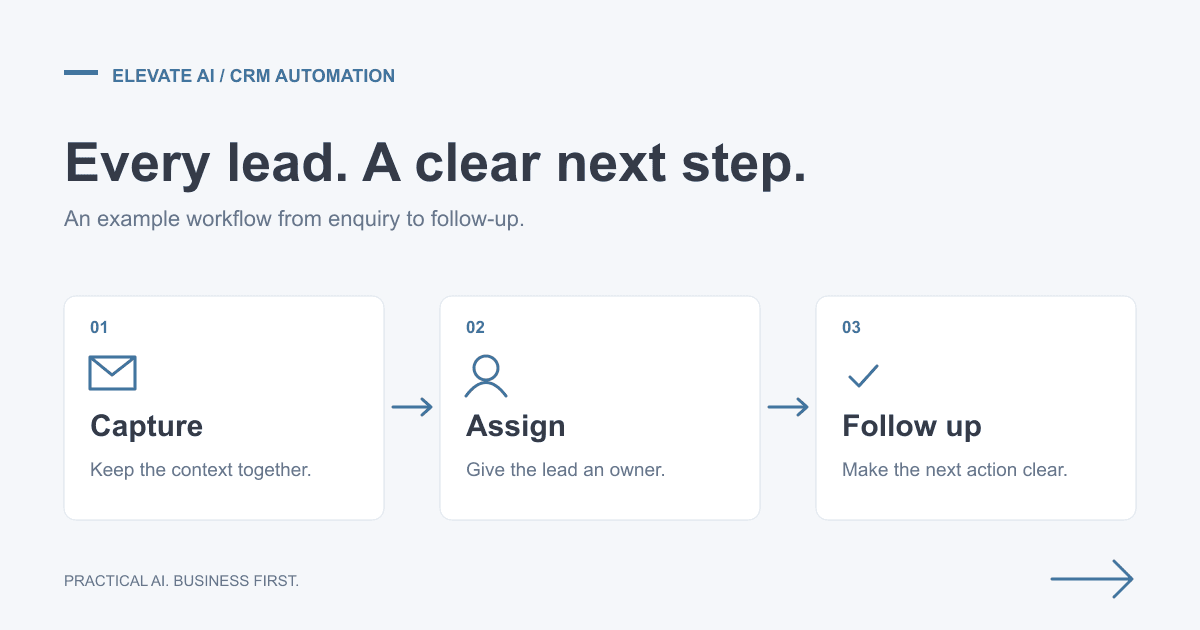
Example workflow: form to CRM to booked call
- Capture: a website form, email reply, referral, or LinkedIn enquiry arrives.
- Clean: the workflow standardises name, company, website, role, source, and message.
- Enrich: it adds simple context such as company website, sector, location, and likely service interest.
- Assign: it chooses the right owner based on source, sector, territory, or deal type.
- Create: it updates or creates the contact, company, deal, note, task, and next action.
- Draft: it prepares a first response with a relevant question or booking link.
- Approve: a human reviews anything bespoke, sensitive, or commercially important.
- Report: it tracks response time, booked calls, CRM completeness, and follow-up completion.
CRM workflows worth automating first
| Business pressure | First CRM workflow | Useful success measure |
|---|---|---|
| Leads are being missed | Capture, assign, draft reply, and create the first follow-up task. | Average response time and percentage of leads with an owner. |
| Sales admin is too manual | Create contacts, companies, deals, notes, and tasks from forms, calls, and emails. | CRM completeness and admin hours saved. |
| Pipeline reviews are unreliable | Flag stale deals, missing next steps, overdue tasks, and stage mismatches. | Deals with a current next action and fewer stale opportunities. |
| Follow-up is inconsistent | Trigger reminders, draft check-ins, and report unanswered high-value leads. | Follow-up completion rate and booked call rate. |
| Reporting takes too long | Summarise new leads, stage movement, stuck deals, source quality, and owner workload. | Report preparation time and clearer management visibility. |
HubSpot, Gmail, calendar, LinkedIn, and reporting touchpoints
CRM automation becomes useful when it joins the places where sales work actually happens. A practical setup might read Gmail replies, classify interest, update HubSpot, create a Google Calendar task, prepare a booking link response, and include the lead in a weekly pipeline report.
LinkedIn or outreach replies can follow the same logic: classify the reply, spot buying intent, attach the message to the right CRM record, suggest the next response, and alert the owner when the signal is strong enough to deserve fast action.
Human approval and GDPR controls
Keep approval in place for pricing, proposal promises, sensitive personal data, regulated-sector decisions, and messages that could create legal or reputational risk. Automation should prepare the work; people should approve judgement-heavy actions.
For GDPR-conscious delivery, document what data is collected, why it is needed, where it is stored, who has access, how long logs are retained, and whether any AI provider processes the data externally. Our UK GDPR and AI guide explains the practical safeguards.
Pilot scope, timeline, and cost range
A sensible first CRM automation pilot should focus on one lead source, one CRM, one owner assignment rule, one draft response flow, and one reporting view. Most UK SME pilots should be measurable within 30 to 90 days.
Elevate AI prices consulting around the agreed scope and deliverables, with implementation quoted separately. The managed Outbound Sales Engine has an initial configuration fee and an ongoing monthly service fee. It has a binding initial three-month minimum commitment; service details are set out in the proposal. See how our pricing works; the budget examples in this article are not a current Elevate AI rate card.
Next step
To discuss your CRM and lead-handling process, explore our AI Consulting engagement or book a free scoping call. The call establishes fit and scope. Detailed discovery, opportunity analysis and a costed roadmap are paid deliverables; implementation is agreed separately.