
AI agents for business UK searches have moved well beyond curiosity. Most business owners I speak to are no longer asking what an AI agent is. They are asking where it fits, what it costs, and whether it will genuinely save time without creating a compliance headache. That is the right question.
An AI agent is useful when it can follow a goal, pull the right information, take a defined action, and hand off when a human should step in. That is very different from a basic chatbot. If you need the technical distinction, read our explainer on how AI agents work. This article is about application, not theory.
Across UK SMEs, the strongest use cases usually sit in sales operations, service, admin, and internal knowledge work. They are not science fiction. They are process improvements with better reasoning built in.
1. Lead qualification and follow up
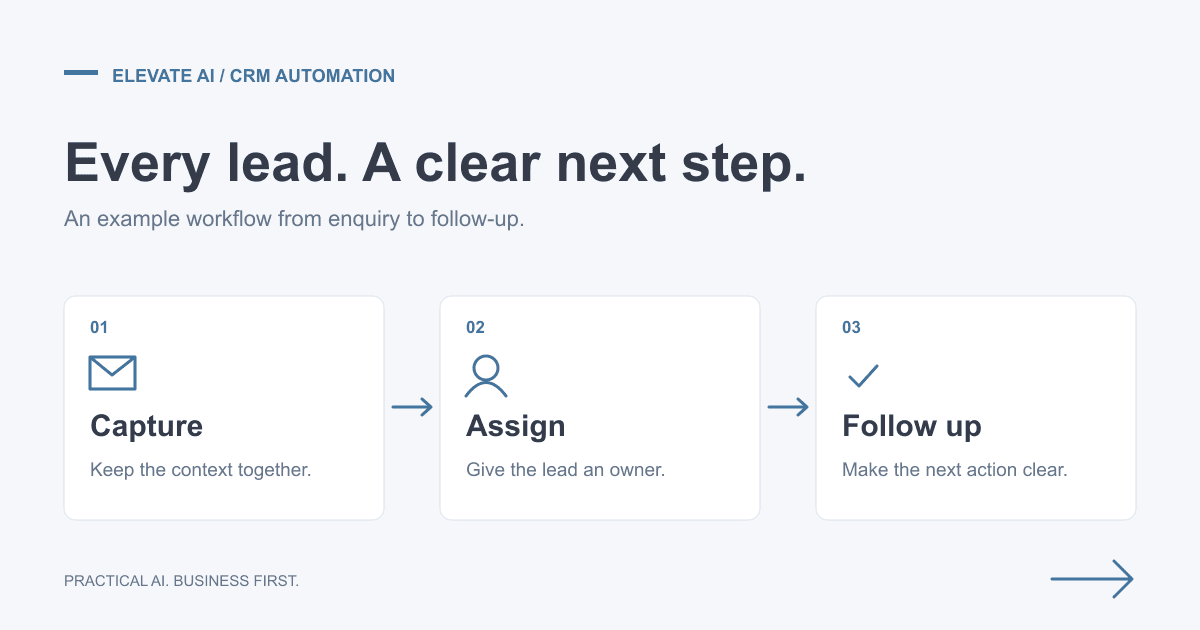
This is one of the clearest commercial use cases for AI agent solutions. An agent can review inbound form fills, email replies, and booking requests, score them against your criteria, enrich the record, and route them to the right person. It can also send the first follow up or schedule reminder tasks automatically.
For a business generating 50 inbound leads a month, that can save 4 to 8 hours of admin and reduce the delay between enquiry and first contact to under five minutes. That matters. Response speed is often the difference between a conversation and a lost lead.
2. Sales research before meetings
Most sales teams do this badly because it is tedious. Someone opens LinkedIn, the company site, Companies House, recent news, then writes a quick note before the call. An AI agent can gather that information, structure it, and prepare a short briefing in under two minutes.
That does not replace judgement. It removes repetitive prep. If each briefing normally takes 15 minutes and your team runs 20 discovery calls a month, that is five hours back straight away.
3. Customer service triage
Service teams lose time when every query lands in the same queue. An AI agent can read the enquiry, classify urgency, identify the likely intent, pull relevant account context, and draft or send an initial response. For routine queries, it may complete the answer itself. For sensitive cases, it should gather context and hand off.
This is where people often confuse agents with standard chatbots. The real value is not just conversation. It is reasoning plus workflow. Our chatbot guide is useful here, but the stronger setups pair front end chat with back end action.
4. Internal help desk for staff
Businesses waste a surprising amount of time answering repeat internal questions. Where is the latest pricing sheet. What is the onboarding checklist. Which proposal template should I use. How do I request annual leave. An internal agent trained on approved documentation can answer those questions instantly and point staff to the right process.
For a 20 person team, even saving 10 minutes per person per week is more than 170 hours a year. That is before you count the interruption cost for managers who no longer have to field every routine question.
5. Reporting and exception monitoring
Many businesses already have dashboards. Fewer have someone consistently looking at them. An AI agent can monitor specific thresholds, compare current figures against expectations, and send useful summaries when something needs attention. That might be a drop in conversion rate, a spike in overdue invoices, or a campaign that has stalled.
This works best when tied to a defined operational workflow. We often combine this with automation services so the agent does not just flag the problem, it also creates the task, alerts the owner, and records the event.
6. Document and inbox processing
Invoices, forms, PDFs, onboarding packs, supplier emails, application documents. These are exactly the kinds of messy inputs that consume admin time. An AI agent can extract fields, categorise the document, validate what is missing, and push clean data into the right system.
In sectors like financial services and healthcare, this needs tighter controls, but the productivity upside is still significant. Just make sure the build includes review steps where accuracy matters.
7. Proposal and scope drafting
Proposal writing often follows the same pattern. The client context changes, but the structure does not. An AI agent can pull discovery notes, reuse approved case study snippets, draft a first scope, and highlight open questions. That turns a blank page exercise into an editing exercise.
For agencies and consultancies, that can cut first draft time from two hours to 30 minutes. If you are evaluating the commercial side, compare this against our pricing guidance and the cost of senior staff doing repetitive drafting work.
8. Recruitment coordination
AI agents are increasingly useful in hiring workflows. They can review applications against simple criteria, schedule interviews, chase scorecards, and update the ATS or spreadsheet automatically. They should not make final hiring decisions, but they are excellent at keeping the process moving.
This is particularly effective for firms with regular hiring or high application volume. The admin saving is immediate, and candidates get faster communication, which improves conversion through the process.
9. Post meeting actions and follow through
One of the most common operational failures is not in the meeting, it is after the meeting. Notes sit in a transcript tool, follow ups are forgotten, and decisions never make it into the CRM or task system. An AI agent can take the transcript, identify actions, assign owners, draft the summary, and update the right systems.
For leadership teams and client facing teams, that creates a quiet but meaningful gain in execution quality.
What AI agents cost in practice
For most UK SMEs, a sensible first agent project sits somewhere between £3,000 and £8,000 depending on integrations, risk level, and how much custom logic is needed. Ongoing costs vary, but a lightweight internal or operational agent can often run for low hundreds per month once live. The mistake is not the tooling cost. The mistake is building an agent for a weak use case.
If the use case is high frequency, measurable, and tied to a real bottleneck, the ROI usually appears quickly. If it is vague, experimental, or disconnected from workflow, it turns into an expensive demo.
How to choose the right first agent
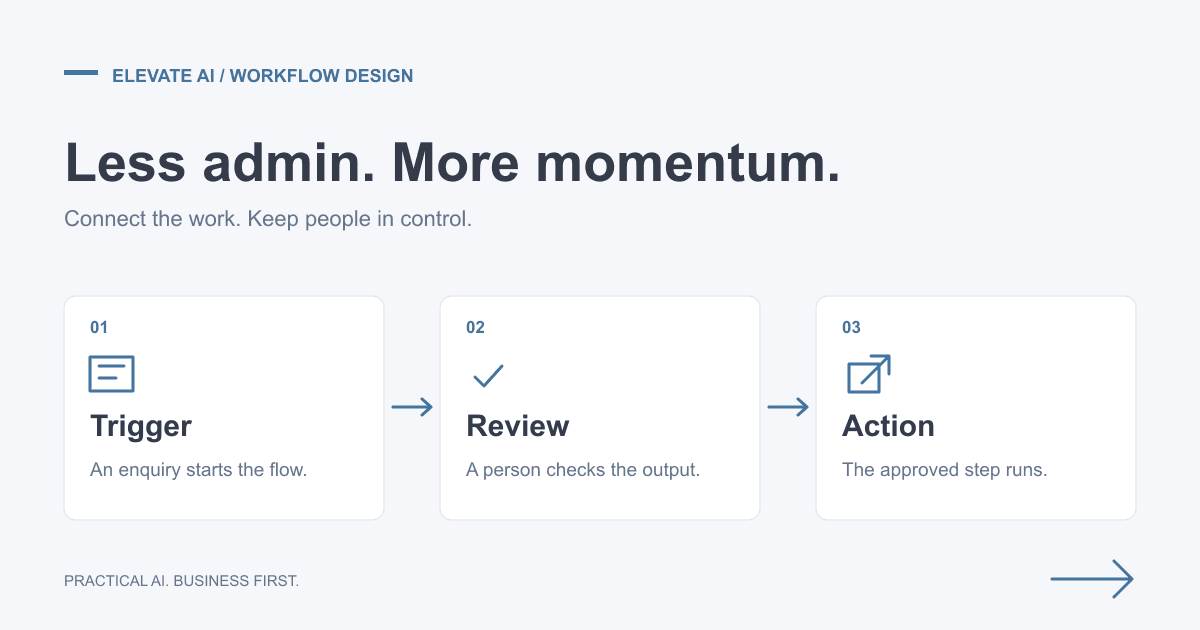
Start with one question: where does your team repeatedly lose time making the same low value decisions. That is usually where an agent can help. Then ask three follow ups. Does the agent need access to systems. What action should it be allowed to take. Where must a human approve or review.
That discipline matters far more than the model brand or the latest AI headline.
Final thought
AI agents for business UK buyers do not need more hype. They need useful, controlled systems that remove friction and help teams move faster. The best projects feel boring in the right way. They save time every week, they fit the existing operation, and they make the business more consistent.
To discuss your business priorities, explore our AI Consulting engagement or book a free scoping call. The call establishes fit and scope. Detailed discovery, opportunity analysis and a costed roadmap are paid deliverables; implementation is agreed separately.