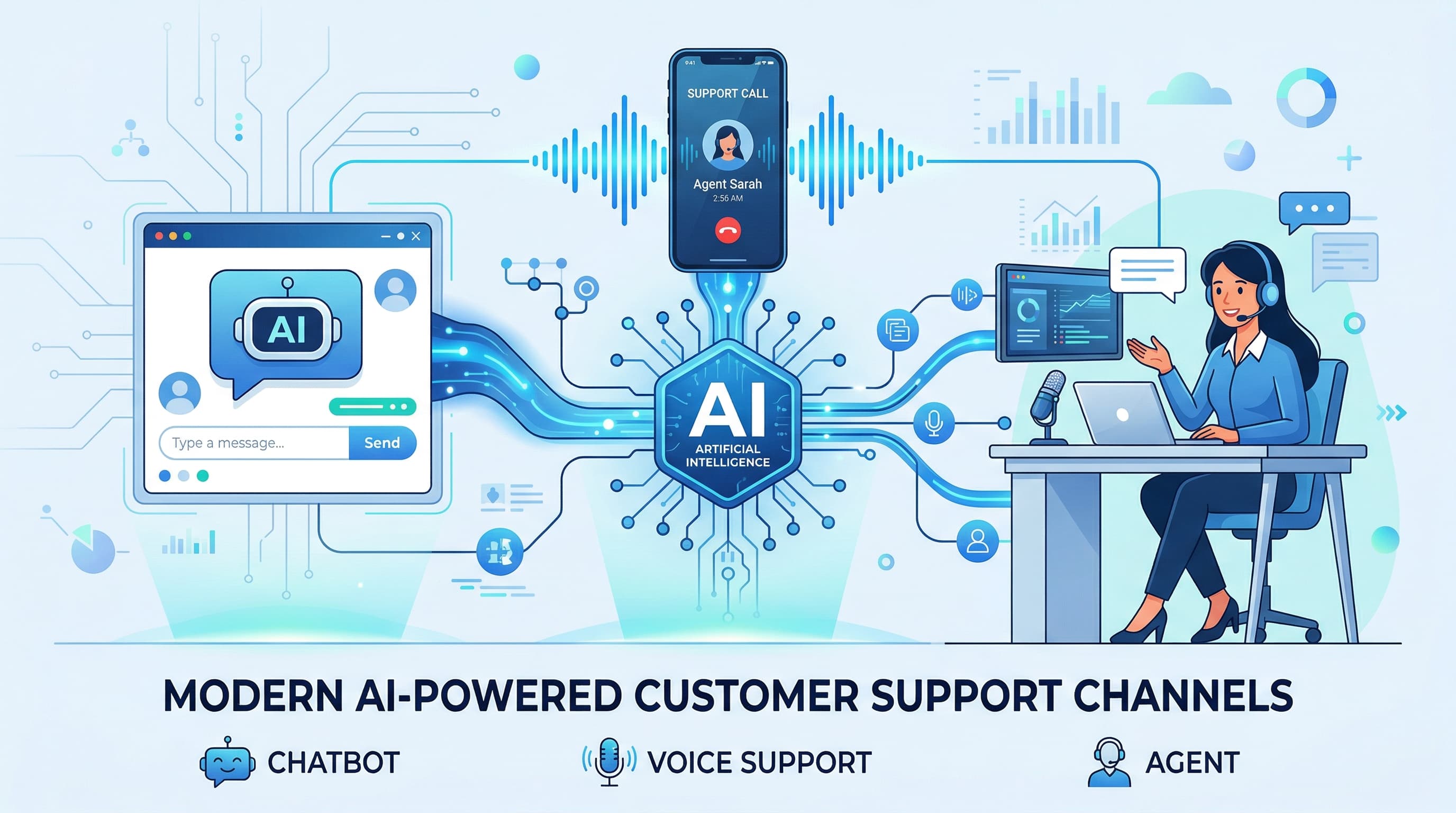
The terms "chatbot" and "AI agent" get used interchangeably, but they describe fundamentally different things. Understanding the difference matters because it affects what you can automate, how much it costs, and the kind of results you can expect.
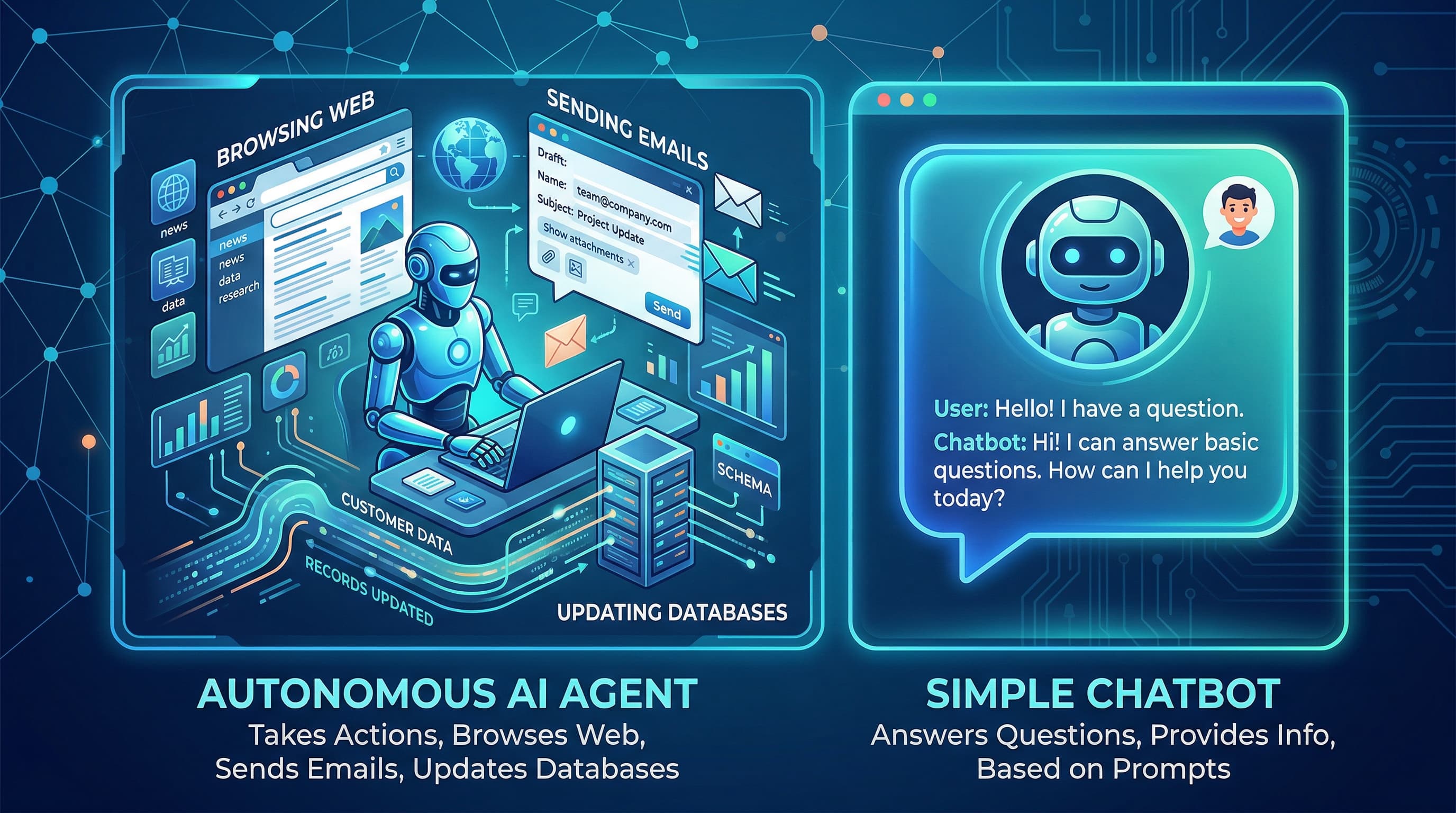
Here is the simplest way to think about it. A chatbot is a tool that answers questions. An AI agent is a tool that takes actions. One is like a reference librarian. The other is like a capable assistant who can actually go and do things on your behalf.
How Chatbots Work
A chatbot receives a message, processes it, and generates a response. The more advanced versions (powered by large language models like GPT or Claude) can understand natural language, maintain context across a conversation, and generate remarkably human sounding replies.
But fundamentally, a chatbot's output is text. It can tell you your order status (if that information is in its knowledge base). It can explain your returns policy. It can suggest products based on a description. What it cannot do is actually check your order in the system, process a return, or place an order. It talks about things. It does not do things.
This is not a criticism. Chatbots are excellent at what they do. For handling FAQs, providing information, and guiding customers to the right resource, a well built chatbot is extremely effective. But understanding this limitation is important for setting expectations.
How AI Agents Work
An AI agent combines the language understanding of a chatbot with the ability to use tools and take actions. It can call APIs, query databases, update records, send emails, create documents, and interact with other software systems.
Think of it this way. When you ask an AI agent "what is the status of order 12345?" it does not look up a pre loaded answer. It connects to your order management system, queries the actual order, reads the current status, and tells you the real time answer. If you then say "I want to return it," the agent can initiate the return process in your system, generate a returns label, send you a confirmation email, and update the CRM record. All within the same conversation.
The key components of an AI agent are:
Language understanding. Like a chatbot, the agent understands what you are asking and can communicate naturally.
Reasoning. The agent can break down complex requests into steps. "Process this return" might involve checking the returns policy, verifying the order date, initiating a refund, generating a label, and sending a confirmation. The agent works out the sequence and executes it.
Tool use. The agent has access to your business systems through APIs and integrations. It can read and write data, trigger processes, and interact with external services.
Memory. The agent remembers context within a conversation and, in more advanced implementations, across conversations. It knows that you called last week about the same order and can reference that history.
Real World Examples
Here are some concrete examples of what AI agents can do that chatbots cannot.
A recruitment agency uses an AI agent to handle initial candidate screening. The agent receives applications via email, extracts key information from CVs, checks the candidate against the role requirements, sends personalised responses to each applicant, and updates the ATS (applicant tracking system) with the screening results. What previously took a recruiter 2 hours per day now happens automatically.
An accounting firm uses an AI agent for client communication during tax season. When a client emails asking about their tax return status, the agent checks the practice management system, finds the current status, and replies with a specific update. If documents are missing, it identifies which ones and sends a request to the client with instructions. The accountant only gets involved when a genuine question needs professional judgement.
A property management company uses an AI agent for maintenance requests. Tenants report issues by text or email. The agent categorises the issue, checks the property records, identifies the relevant contractor, sends the contractor a job request with all the details, and confirms with the tenant that help is on the way. Emergency issues are escalated to the duty manager immediately.
Why the Distinction Matters for Your Business
When a vendor tells you they will build you a "chatbot," you need to understand what that means in practice. If you need something that answers frequently asked questions and points people to the right page on your website, a chatbot is perfect and cost effective.
If you need something that actually handles customer requests end to end, processes transactions, updates systems, and takes meaningful action, you need an agent. The cost is higher, but the value is proportionally greater because you are automating entire workflows, not just the question and answer part.
Many businesses start with a chatbot and later upgrade to an agent as they see the value of AI in their customer facing processes. That is a perfectly valid approach. The important thing is understanding what each technology actually delivers so you invest appropriately.
Where Agents Are Heading
AI agent technology is evolving rapidly. Current agents work well within defined boundaries, handling specific tasks with specific tools. The next generation of agents will be more autonomous, capable of handling a wider range of tasks with less pre configuration.
We are already seeing agents that can learn from successful interactions and improve their processes over time. Agents that can coordinate with other agents to handle complex, multi department requests. Agents that can proactively identify opportunities or problems rather than waiting to be asked.
For UK businesses, the practical implication is that the automations you build today will become more capable over time as the underlying AI technology improves. An agent that handles 70% of customer queries today might handle 85% next year, without any changes to your setup.
Getting Started with AI Agents
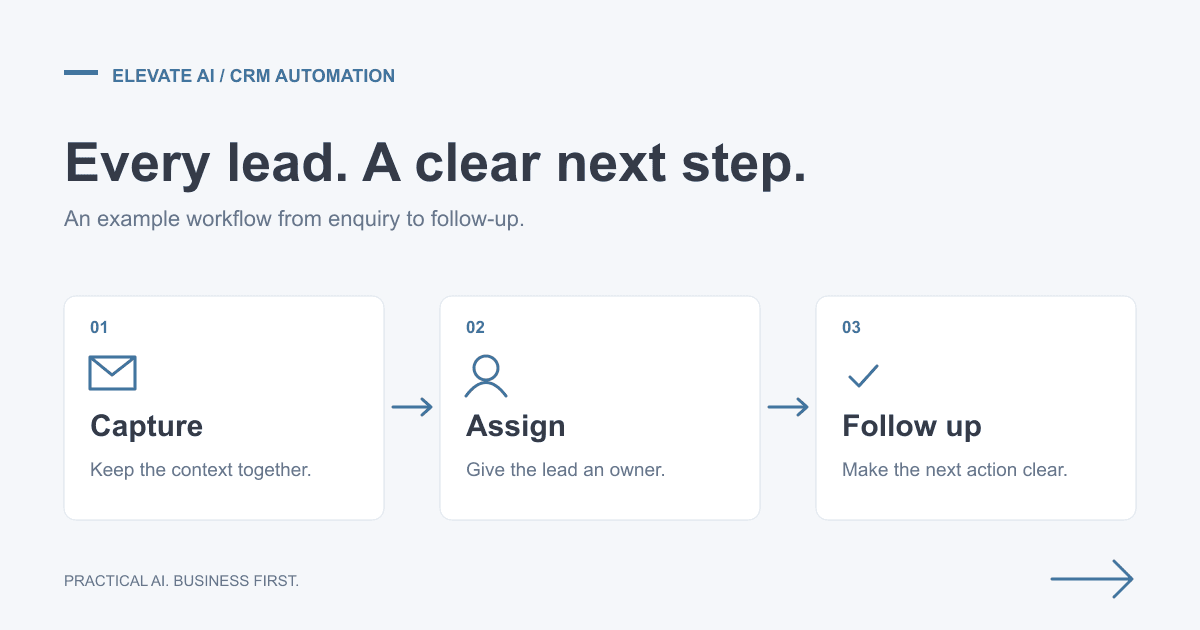
The best starting point is to identify a specific process in your business that involves receiving a request, checking information, taking an action, and communicating the result. That pattern is where agents deliver the most value.
Common first agent projects include customer service enquiry handling, appointment booking and management, order status and returns processing, lead qualification and initial outreach, and internal IT helpdesk requests.
At Elevate AI, building AI agents is one of our core services. We design agents that integrate with your existing systems, handle your specific use cases, and include proper guardrails so they operate safely and reliably.
To discuss your business priorities, explore our AI Consulting engagement or book a free scoping call. The call establishes fit and scope. Detailed discovery, opportunity analysis and a costed roadmap are paid deliverables; implementation is agreed separately.
Related reading: AI automation for recruitment agencies.