Back to BlogAI Solutions

AI for Customer Service: Chatbots, Voice Agents, and Beyond

Billy Lewis12 February 20268 min read
AI for Customer Service: Chatbots, Voice Agents, and Beyond

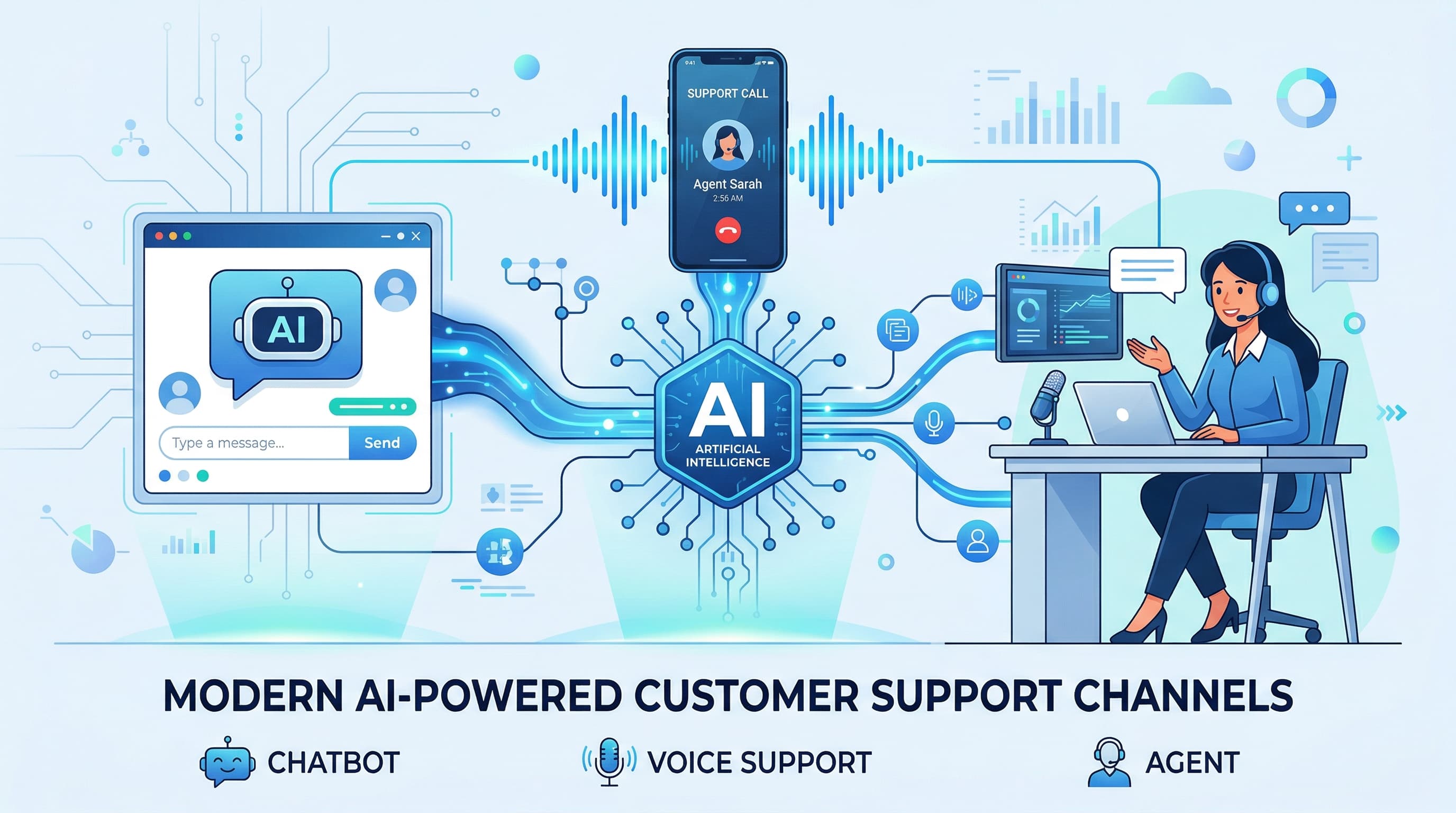
Customer service is one of the areas where AI is making the most visible impact for UK businesses. But the technology exists on a spectrum, and understanding where different solutions sit on that spectrum is important for making the right investment.

At one end, you have simple rule based chatbots that follow a script. At the other, you have fully autonomous AI agents that can handle complex queries, access your systems, and resolve issues without human involvement. Most businesses sit somewhere in the middle, and that is perfectly fine.

The Customer Service AI Spectrum

Level 1: Rule Based Chatbots

These are the chatbots most people are familiar with. They follow decision trees: "Is your query about deliveries, returns, or something else?" Based on your selection, they walk you through a pre written script. They are cheap to build (£500 to £2,000), easy to maintain, and work well for businesses with a small number of frequently asked questions.

The limitation is obvious. If a customer's question does not fit the script, the bot gets stuck. Anyone who has experienced the frustration of typing "speak to a human" five times knows the feeling. Rule based chatbots handle roughly 30% to 40% of incoming queries well. The rest need escalating to a human.

Level 2: AI Powered Chatbots

These use large language models (the same technology behind ChatGPT and Claude) to understand what customers are asking and generate natural, contextual responses. They can be trained on your specific business knowledge, products, policies, and tone of voice.

The difference in customer experience is significant. Instead of choosing from a menu, customers type their question naturally and get a relevant, helpful response. The AI can handle variations in how people phrase things, follow up questions, and multi part queries. Well implemented AI chatbots resolve 60% to 75% of customer queries without human involvement.

Setup costs range from £3,000 to £8,000, with monthly running costs of £100 to £400 depending on volume. For businesses handling more than 200 customer queries per month, the investment typically pays for itself within six months.

Level 3: Voice Agents

Voice agents take AI customer service off the screen and onto the phone. Using speech to text, language models, and text to speech technology, they can answer phone calls, understand what the caller needs, and either resolve the issue directly or route them to the right person with full context.

For UK businesses, voice agents are particularly valuable because many customers still prefer to phone. A small business that cannot afford to staff a phone line all day can use a voice agent to handle calls outside office hours, during peak periods, or for common queries like opening times, appointment booking, and order status checks.

Voice agents typically cost £5,000 to £12,000 to set up, with per minute charges for calls (usually 5p to 15p per minute depending on the provider). A business handling 500 calls per month might spend £200 to £400 per month on voice agent processing.

Level 4: Full AI Customer Service Agents

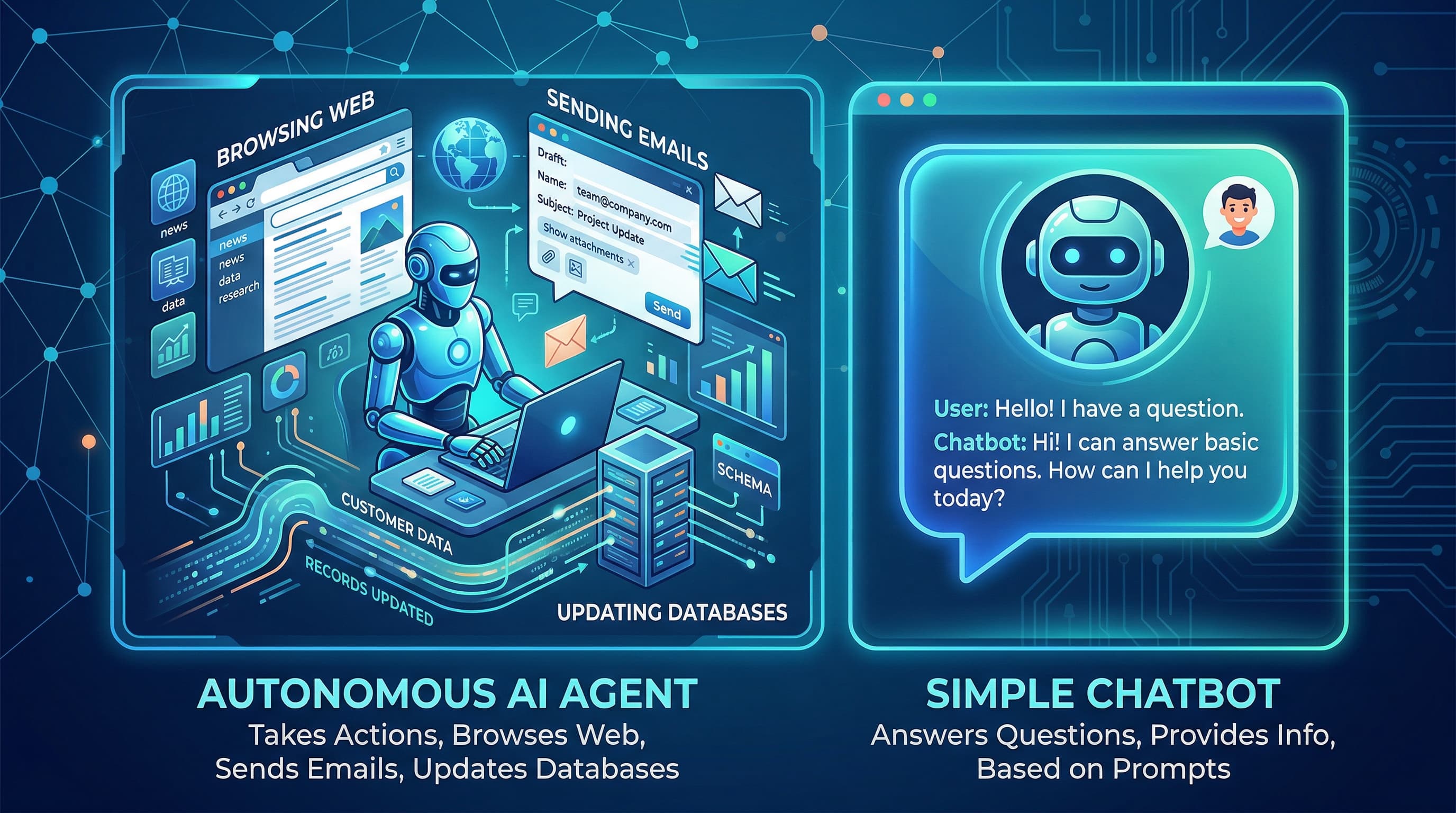
At the top of the spectrum, AI agents go beyond answering questions. They can take actions. Check an order status in your system and tell the customer where their parcel is. Process a return and generate a shipping label. Update an account detail. Reschedule an appointment. Book a table.

These agents integrate with your back end systems (CRM, order management, booking systems, inventory) and can resolve issues end to end without a human ever being involved. They maintain context across the conversation, remember what was discussed, and handle complex, multi step requests.

Setup costs for full AI agents range from £8,000 to £20,000, depending on the number of systems they need to connect to and the complexity of the actions they perform. But for businesses with high customer service volumes, the ROI is substantial. A full time customer service representative in the UK costs approximately £25,000 to £30,000 per year including employer contributions. An AI agent that handles 70% of queries costs a fraction of that.

Real UK Examples

A mid sized ecommerce business based in Birmingham was spending £45,000 per year on a three person customer service team. They implemented an AI chatbot that handles product questions, order tracking, and returns initiation. Within three months, 65% of queries were resolved without human involvement, allowing them to reduce the team to two people and redeploy the third to a revenue generating role.

A dental practice in Leeds installed a voice agent to handle appointment booking and rescheduling calls. Previously, the receptionist was spending roughly 15 hours per week on the phone managing appointments. The voice agent now handles 80% of these calls, freeing the receptionist to focus on patient care and in person queries. The practice estimated it saved them roughly £12,000 per year in staff time.

A property management company in Manchester used an AI agent to handle tenant maintenance requests. Tenants report issues via chat or phone, the AI categorises the problem, checks the property records, identifies the appropriate contractor, and schedules the work. Urgent issues are flagged immediately to the duty manager. The system handles around 200 maintenance requests per month with minimal human oversight.

What to Expect During Implementation

Regardless of which level you choose, implementation follows a similar process. First, we gather your existing customer service data: common questions, response templates, product information, policies, and any system documentation. This becomes the AI's knowledge base.

Then we build and train the system, testing it against real queries to ensure accuracy. This typically takes two to four weeks for chatbots and four to eight weeks for full AI agents.

After launch, there is a tuning period of two to four weeks where we monitor performance, identify gaps in the AI's knowledge, and refine its responses. Most systems reach peak performance within six to eight weeks of going live.

Throughout, your existing customer service team remains in place. AI handles what it can; humans handle the rest. Over time, as the AI improves and handles more queries, you can make decisions about team structure based on real data.

Choosing the Right Level

The right choice depends on your volume, budget, and the complexity of your customer queries.

Under 100 queries per month: A rule based chatbot or a well organised FAQ page is probably sufficient. The investment in AI may not justify the return at this volume.

100 to 500 queries per month: An AI powered chatbot offers the best balance of cost and capability. This is the sweet spot for most UK SMEs.

Over 500 queries per month: Consider a full AI agent, especially if your queries involve accessing systems (order tracking, appointment booking, account management). The higher setup cost is offset by significant ongoing savings.

Heavy phone traffic: If a significant portion of your customer contact comes by phone, a voice agent should be part of the solution.

You can see detailed pricing for all of these options on our pricing page.

Getting Started

The best starting point is to understand your current customer service workload. What are the most common queries? How are they currently handled? What proportion could realistically be resolved without human involvement? How much is your current setup costing you?

If you would like help answering those questions, book a free discovery call. We will review your customer service operation, recommend the right level of AI for your needs, and give you a clear plan with realistic costs and timelines. We build customer service AI solutions for UK businesses as part of our automation services, and we are happy to share what works (and what does not) based on our experience.